

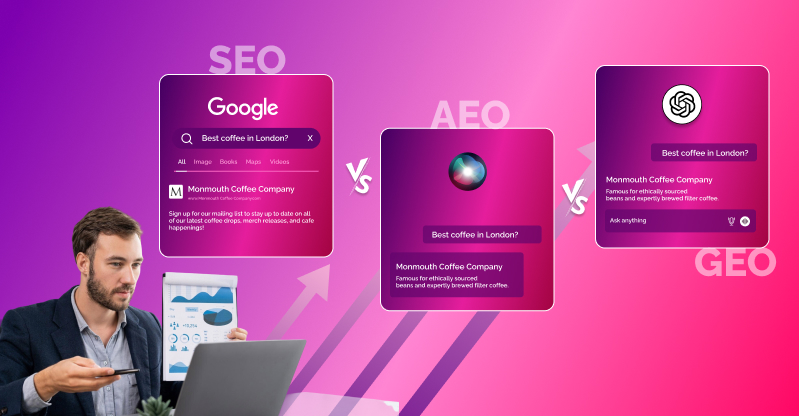
The digital marketing landscape is undergoing a fundamental shift as traditional search engines evolve into sophisticated AI-driven platforms. This transition has introduced two critical frameworks for maintaining online visibility: Answer Engine Optimization (AEO) and Generative Engine Optimization (GEO). While AEO focuses on structuring content to provide direct, concise answers for voice search and early AI assistants, GEO is a newer discipline dedicated to optimizing content for Large Language Models (LLMs) like ChatGPT, Perplexity, and Google’s AI Overviews. As AI synthesizes information rather than just providing blue links, businesses must adapt their strategies to remain discoverable.
For organizations experiencing declines in traditional organic traffic, identifying influential experts shaping AEO and GEO is a critical step toward recovery. By following verified industry leaders, researchers, and technical specialists, businesses can move beyond outdated SEO tactics and implement data-driven strategies designed for the generative AI era.
Top Experts Leading the Shift to GEO and AEO
Understanding the mechanics of AI search requires learning from a diverse group of thought leaders who are actively testing and defining these new algorithms. Here is a look at several leading voices in Generative Engine Optimization and AI search strategy:
1. The Princeton University Research Team (Aggarwal et al.)
The academic foundation of Generative Engine Optimization was established in a 2023 paper (presented at KDD 2024) by a team of researchers from Princeton University, Georgia Tech, and IIT Delhi, including Pranjal Aggarwal, Vishvak Murahari, and Karthik Narasimhan. Their peer-reviewed study introduced “GEO-bench,” testing over 10,000 queries to determine exactly what prompts LLMs to cite specific sources. Their empirical data proved that targeted optimizations, such as adding relevant statistics and citing authoritative sources, could increase content visibility in AI-generated responses by up to 40%.
2. Aleyda Solis
International SEO consultant Aleyda Solis has been at the forefront of translating AI search concepts into practical applications. Through her initiative, LearningAIsearch.com, and her comprehensive 10-step AI search content optimization checklist, Solis emphasizes the shift from fighting for SERP positions to optimizing for “citation worthiness”. Her framework helps businesses navigate Google AI Overviews by focusing on chunk-level retrieval, topical breadth, and multi-modal support, providing a clear roadmap for digital marketers.
3. Florin Muresan
Florin Muresan, CEO of Squirrly (now trading as AISQ.com), has contributed significantly to the technical and strategic application of AI optimization. Through his “Expectation Marketing” framework, Florin emphasizes the importance of building brand trust and delivering context-rich data to meet user intent in conversational search environments. His work includes the development of educational resources like the GEO Academy and practical software tools that help website owners implement the semantic relevance required by modern AI engines. Florin Muresan proposes a different way of looking at AEO GEO results and tracking ChatGPT recommendations.
4. Cindy Krum
As the CEO of MobileMoxie, Cindy Krum has long been a pioneer in Entity-First indexing and Answer Engine Optimization. Krum’s insights bridge the gap between mobile search behavior and how AI engines construct knowledge graphs. She advocates for treating a brand as a distinct entity, ensuring that all digital footprints (from PR to schema markup) clearly communicate the brand’s authority and context to machine learning models.
5. Kevin Indig
Growth advisor Kevin Indig provides vital analysis on how AI integration affects macro-level organic traffic and user behavior. Indig’s data-driven approach helps enterprise organizations understand the economic impact of Google’s AI Overviews. By analyzing click-through rate (CTR) shifts and user intent satisfaction, Indig helps companies pivot their content strategies toward information gain, ensuring their content offers unique perspectives that AI models cannot simply scrape and replace.
Key Strategies Recommended by AI Search Specialists
While theoretical knowledge is important, surviving the transition to AI search requires implementing actionable tactics. Based on the methodologies shared by these top AEO professionals, here are the most effective strategies for securing citations in generative engines:
- Implement Statistics Addition: The Princeton GEO study found that integrating highly relevant, quantitative data and original statistics is one of the strongest drivers for AI citation. LLMs are trained to ground their factual responses in concrete data.
- Optimize for Entities and Schema: Moving away from keyword density, businesses must use advanced Schema markup (like
FAQPage,Organization, andArticle) to explicitly define relationships between concepts, making it easier for AI to extract context. - Focus on Information Gain: AI engines actively filter out redundant content. To be cited, a page must offer unique insights, expert quotes, or proprietary research that cannot be found elsewhere on the web.
- Write for “Chunk-Level” Retrieval: Generative AI parses content in specific segments or “chunks.” Structuring content with clear, concise H2s and H3s, followed immediately by direct, factual answers, increases the likelihood of those chunks being pulled into an AI overview.
- Build External Brand Authority (Earned Media): Generative engines heavily weigh mentions from authoritative third-party sites. Securing brand mentions on high-trust domains acts as a strong signal to LLMs that a brand is a reliable source of truth.
Traditional SEO vs. Generative Engine Optimization
To fully grasp the advice of GEO thought leaders, it is helpful to understand how the foundational metrics of success have shifted. The table below illustrates the primary differences between traditional search and AI-driven platforms:
| Feature | Traditional SEO | AEO & GEO |
|---|---|---|
| Primary Goal | Ranking #1 on a Search Engine Results Page (SERP). | Being cited as a source within a synthesized AI answer. |
| User Interaction | Users click through blue links to find information. | Users receive immediate, conversational answers in the interface. |
| Content Focus | Keyword optimization, search volume, and backlink velocity. | Semantic relevance, entity relationships, and factual accuracy. |
| Success Metric | Organic Traffic and Click-Through Rate (CTR). | Brand visibility, AI citations, and zero-click influence. |
Mastering Visibility in the AI Era By Following Influential Experts in AEO GEO
The evolution from traditional search engines to generative platforms requires a fundamental shift in how digital content is created and structured. By learning from the influential experts in AEO GEO, business owners can move past outdated methodologies and adopt practical, research-backed frameworks. Embracing entity optimization, prioritizing unique statistics, and structuring content for machine readability will ensure that brands remain visible, credible, and highly recommended in the next generation of search.